

Introduction
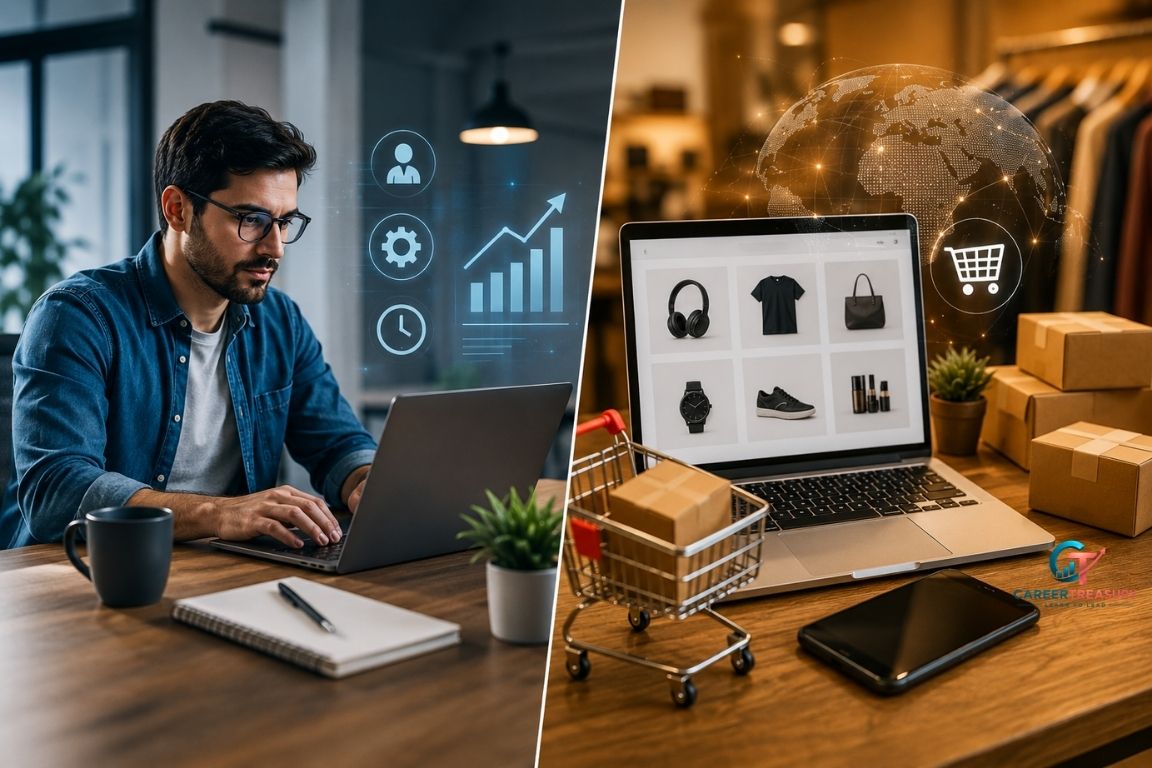
Starting a business in 2026 is easier than ever thanks to digital technology, online payments, and growing internet adoption. Two of the most popular business models today are service-based businesses and e-commerce businesses.
Many aspiring entrepreneurs often ask: Which business model is more profitable? The answer depends on your skills, investment capacity, goals, and target market.
Service-based businesses focus on selling expertise, skills, or labor, while e-commerce businesses generate revenue by selling products online. Both models offer unique advantages and challenges. Understanding these differences can help entrepreneurs make informed decisions and build sustainable businesses. Service businesses generally have lower startup costs, while e-commerce businesses can scale more easily and reach wider markets.
What Is a Service-Based Business?
A service-based business earns money by providing skills, expertise, or professional services rather than selling physical products.
Examples
- Digital Marketing Agency
- Content Writing Services
- Graphic Design Studio
- Web Development Agency
- Accounting Services
- Business Consulting
- Online Tutoring
- Personal Coaching
In this model, customers pay for outcomes, knowledge, or expertise instead of tangible goods. Service businesses are often attractive because they can start with minimal investment and leverage existing skills.

What Is an E-Commerce Business?
An e-commerce business sells products through online platforms, websites, or marketplaces.
Examples
- Fashion Stores
- Electronics Stores
- Home Decor Brands
- Beauty Products
- Dropshipping Stores
- Print-on-Demand Businesses
E-commerce covers multiple models including B2C, B2B, D2C, marketplace selling, subscriptions, and social commerce. Global e-commerce continues to grow rapidly, creating opportunities for businesses of all
Service-Based vs E-Commerce Business
SERVICE BUSINESS
↓
Skills & Expertise
↓
Low Investment
↓
Client-Based Revenue
↓
Personalized Services
VS
E-COMMERCE BUSINESS
↓
Products
↓
Inventory/Suppliers
↓
Online Sales
↓
Scalable Growth
Key Differences Between Service-Based Businesses and E-Commerce
| Factor | Service Business | E-Commerce Business |
|---|---|---|
| Startup Cost | Low | Moderate to High |
| Inventory | Not Required | Usually Required |
| Scalability | Moderate | High |
| Customer Reach | Local or Global | Global |
| Revenue Model | Service Fees | Product Sales |
| Automation | Limited | Higher |
| Profit Margins | Often High | Depends on Product |
| Time Dependency | High | Lower Once Established |
These differences influence profitability, growth potential, and daily operations.
Advantages of Service-Based Businesses
1. Low Startup Investment
One of the biggest benefits of service-based businesses is their low startup cost. Many entrepreneurs can begin from home with only a laptop and internet connection.
2. Faster Launch
Unlike product businesses, service businesses do not require manufacturing, inventory management, or warehousing.
3. High Profit Margins
Because there is little or no inventory cost, many service businesses enjoy strong profit margins.
4. Flexibility
Many service providers can work remotely and serve clients worldwide.
5. Skill-Based Growth
Success depends heavily on expertise and customer satisfaction rather than inventory management.
Challenges of Service-Based Businesses
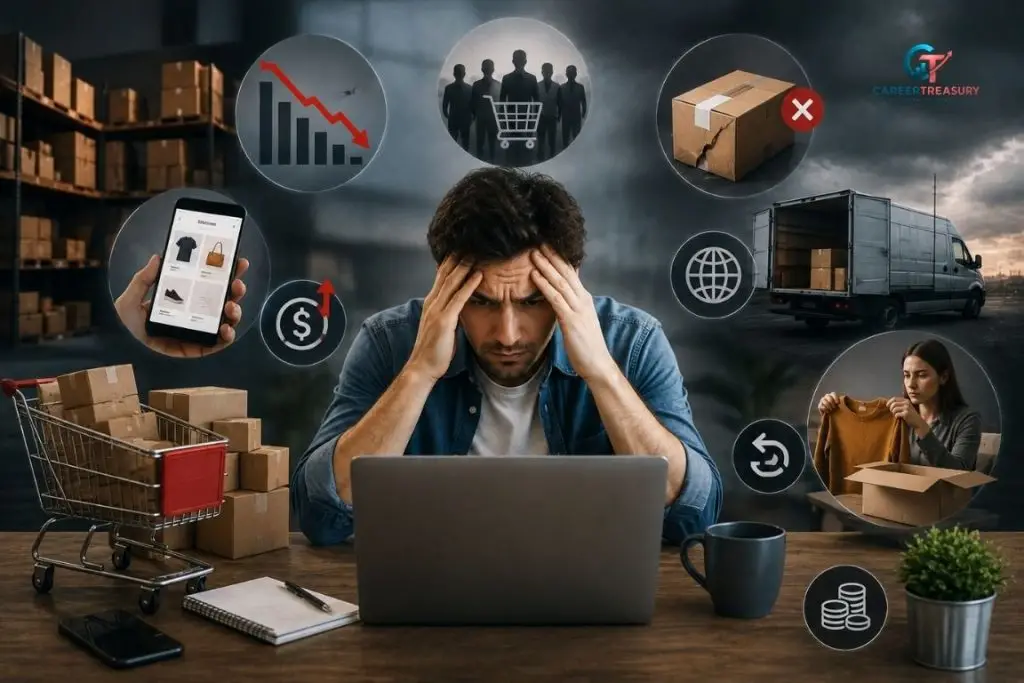
Limited Scalability
Since income often depends on time and expertise, growth can become difficult without hiring staff or creating systems.
Client Dependency
Revenue may fluctuate if client projects slow down.
Difficult Work-Life Balance
Many entrepreneurs initially exchange time directly for income.
Customer Acquisition
Finding consistent clients can take time and effort.
Advantages of E-Commerce Businesses
1. Global Market Reach
E-commerce businesses can sell products across cities, states, and countries.
2. Scalability
A single product can be sold thousands of times without requiring proportional increases in labor.
3. Automation Opportunities
Modern platforms allow automation of:
- Order processing
- Inventory tracking
- Customer support
- Email marketing
4. Brand Building
E-commerce enables entrepreneurs to create recognizable brands with long-term value.
5. Multiple Revenue Streams
Businesses can expand through:
- Marketplace sales
- Direct-to-consumer websites
- Subscription models
- Social commerce
Challenges of E-Commerce Businesses
Inventory Management
Many e-commerce businesses require stock management, storage, and logistics.
Higher Competition
The online marketplace is highly competitive across most categories.
Shipping and Returns
Handling deliveries and customer returns can affect profitability.
Marketing Costs
Paid advertising expenses can increase customer acquisition costs significantly.
Which Business Requires Less Investment?
For most beginners, service-based businesses require significantly lower investment.
Examples:
- Freelancing
- Consulting
- Content Creation
- Virtual Assistance
- Graphic Design
Many service businesses can start with under ₹50,000.
E-commerce businesses often require:
- Product sourcing
- Inventory
- Packaging
- Shipping
- Website development
- Advertising budget
Although dropshipping can reduce inventory costs, marketing expenses still exist.
Which Business Is More Profitable?
Profitability depends on execution rather than business type.
Service Businesses
Often generate:
- Higher margins
- Faster cash flow
- Lower operating expenses
E-Commerce Businesses
Often generate:
- Larger revenue potential
- Better scalability
- Greater long-term brand value
Many successful entrepreneurs start with services and later invest profits into e-commerce ventures.
Hybrid Business Model: The Best of Both Worlds
Many modern businesses combine services and e-commerce.
Examples
- Fitness coach selling courses and supplements
- Marketing agency selling templates
- Educator selling digital products
- Consultant offering online memberships
Hybrid models diversify income sources and reduce dependency on a single revenue stream.
Best Service-Based Business Ideas in 2026
- AI Consulting
- Digital Marketing Agency
- SEO Services
- Content Writing
- Video Editing
- Business Coaching
- Online Tutoring
- Cybersecurity Consulting
- Graphic Design
- Social Media Management
Demand for technology, education, and professional services remains strong.
Best E-Commerce Business Ideas in 2026
- Home Decor
- Sustainable Products
- Fitness Accessories
- Pet Products
- Print-on-Demand
- Personalized Gifts
- Beauty Products
- Smart Home Gadgets
- Educational Products
- Digital Products
Direct-to-consumer (D2C) brands are growing rapidly in India and worldwide.
Frequently Asked Questions
Which business is easier to start?
Service-based businesses are generally easier because they require less capital and inventory.
Which business has higher growth potential?
E-commerce businesses often have higher scalability and broader market reach.
Can I run both together?
Yes. Many successful entrepreneurs combine services with digital or physical product sales.
Which is better for beginners?
For most beginners, service-based businesses offer lower risk and faster startup opportunities.
Is e-commerce still profitable in 2026?
Yes. E-commerce continues to grow globally, especially through D2C, social commerce, and niche brands.
Conclusion
Both service-based businesses and e-commerce businesses offer excellent opportunities in 2026. Service businesses are ideal for entrepreneurs with valuable skills and limited startup capital, while e-commerce businesses provide greater scalability and long-term brand-building potential.
The best choice depends on your strengths, budget, and business goals. Entrepreneurs seeking low-risk entry may prefer services, while those aiming for large-scale growth may find e-commerce more attractive. In many cases, a hybrid approach can deliver the benefits of both models.








Leave a Reply