

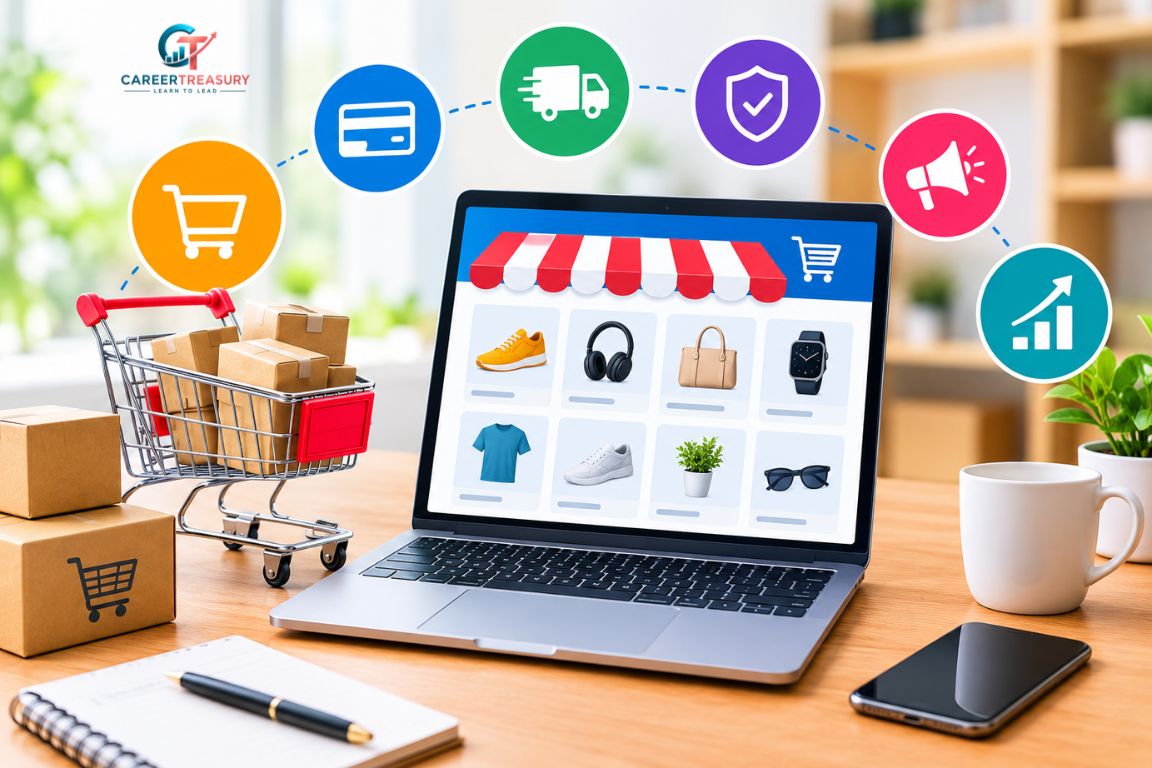
The e-commerce industry continues to grow at an incredible pace, creating opportunities for entrepreneurs to build profitable online businesses from anywhere in the world. Whether you want to sell physical products, digital goods, or services, starting an e-commerce business has become more accessible than ever.
With increasing internet penetration, digital payments, and changing consumer habits, 2026 is an excellent time to launch an online store. However, success in e-commerce requires careful planning, market research, and effective execution.
In this guide, you’ll learn the step-by-step process of starting an e-commerce business, choosing the right products, setting up your store, and attracting customers.
What Is an E-commerce Business?
An e-commerce business involves buying and selling products or services through the internet. Customers browse products online, place orders, and make payments digitally.
Popular examples of e-commerce businesses include:
- Online retail stores
- Dropshipping businesses
- Digital product marketplaces
- Subscription-based stores
- Print-on-demand businesses
- Direct-to-consumer (D2C) brands
The flexibility and scalability of online selling make e-commerce one of the most attractive business models today.
Why Start an E-commerce Business ?
Several factors make e-commerce a promising business opportunity:
Growing Online Shopping Market
Millions of consumers now prefer online shopping because of convenience, competitive pricing, and wider product choices.
Lower Startup Costs
Unlike traditional retail businesses, e-commerce stores do not always require physical storefronts or large inventories.
Global Reach
An online store allows you to reach customers across cities, states, and even countries.
Automation Opportunities
Modern tools can automate inventory management, customer support, email marketing, and order processing.
Flexible Work Environment
Many e-commerce entrepreneurs operate their businesses remotely and manage operations from home.

Step 1: Choose a Profitable Niche
Selecting the right niche is one of the most important decisions you’ll make.
A niche refers to a specific market segment that serves a targeted audience.
Examples include:
- Fitness products
- Home decor
- Kitchen accessories
- Pet supplies
- Beauty products
- Educational products
- Mobile accessories
When choosing a niche, consider:
- Market demand
- Competition level
- Profit margins
- Personal interest
- Growth potential
Use keyword research tools and marketplace data to identify trending products and customer needs.
Step 2: Conduct Market Research
Before investing money, understand your target audience.
Research:
- Customer demographics
- Shopping behavior
- Competitor strategies
- Pricing trends
- Product reviews
Analyze successful competitors to identify strengths, weaknesses, and opportunities in the market.
Questions to ask include:
- What problems does the product solve?
- Who is the ideal customer?
- Why would customers buy from you instead of competitors?
Good market research reduces risk and improves decision-making.
Step 3: Create a Business Plan
A business plan provides direction and helps you stay focused.
Your plan should include:
Business Overview
Describe your products and target audience.
Revenue Model
Explain how your business will generate income.
Marketing Strategy
Outline methods for attracting customers.
Budget
Estimate startup costs and operational expenses.
Growth Plan
Define short-term and long-term business goals.
A clear business plan increases your chances of success.
Step 4: Decide Your Business Model
There are several e-commerce models available.
Inventory-Based Selling
You purchase products, store inventory, and ship orders yourself.
Dropshipping
Suppliers handle inventory and shipping while you focus on sales and marketing.
Print-on-Demand
Products are printed only after customers place orders.
Digital Products
Examples include e-books, courses, templates, and software.
Subscription Model
Customers pay recurring fees for products or services.
Choose the model that matches your budget, skills, and goals.
Step 5: Register Your Business
Depending on your location and scale, you may need:
- Business registration
- Tax registration
- GST registration (where applicable)
- Business bank account
- Required licenses
Operating legally helps build customer trust and simplifies financial management.
Always check local regulations before launching.
Step 6: Choose the Right E-commerce Platform
Your platform serves as the foundation of your online store.
Popular options include:
- Shopify
- WooCommerce
- BigCommerce
- Wix
- Magento
When selecting a platform, consider:
- Ease of use
- Customization options
- Mobile responsiveness
- Payment integrations
- Security features
- Scalability
Choose a platform that supports future growth.
Step 7: Build Your Online Store
A professional website creates a positive first impression.
Essential pages include:
Homepage
Showcase featured products and brand messaging.
Product Pages
Include:
- High-quality images
- Detailed descriptions
- Pricing information
- Customer benefits
About Us
Share your story and mission.
Contact Page
Provide support options and contact information.
Policies
Include:
- Privacy Policy
- Terms and Conditions
- Shipping Policy
- Return and Refund Policy
These pages improve transparency and help meet advertising platform requirements.
Step 8: Set Up Secure Payment Methods
Customers expect convenient and secure payment options.
Popular payment methods include:
- Credit cards
- Debit cards
- UPI
- Net banking
- Digital wallets
Use trusted payment gateways that offer:
- Secure transactions
- Fast processing
- Fraud protection
Security is essential for customer confidence.
Step 9: Optimize for Search Engines
Search Engine Optimization (SEO) helps customers discover your store.
Important SEO practices include:
Keyword Research
Use relevant keywords naturally throughout your content.
Product Descriptions
Write unique and informative descriptions.
Site Speed
Fast-loading websites improve user experience.
Mobile Optimization
Most online shoppers use smartphones.
Internal Linking
Connect related products and articles.
SEO generates long-term organic traffic and reduces dependence on paid advertising.
Step 10: Develop a Marketing Strategy
Even the best products require effective promotion.
Content Marketing
Publish helpful blog posts related to your niche.
Social Media Marketing
Build a presence on platforms such as:
- YouTube
Email Marketing
Collect email subscribers and send valuable updates.
Influencer Marketing
Partner with trusted creators in your industry.
Paid Advertising
Use advertising platforms strategically to increase visibility.
A balanced marketing approach delivers better results over time.
Step 11: Focus on Customer Service
Excellent customer support helps build loyalty and repeat business.
Best practices include:
- Fast response times
- Clear communication
- Easy return processes
- Helpful product information
Satisfied customers often become brand advocates and generate referrals.
Step 12: Monitor Performance and Improve
Track important metrics such as:
- Website traffic
- Conversion rate
- Average order value
- Customer acquisition cost
- Customer retention rate
Analytics tools provide valuable insights into customer behavior and business performance.
Use data to identify opportunities and improve results continuously.
Common Mistakes to Avoid
Many beginners make avoidable mistakes.
Avoid:
- Choosing products without research
- Ignoring customer feedback
- Poor website design
- Weak product descriptions
- Overreliance on paid advertising
- Lack of inventory planning
- Inconsistent marketing
Learning from mistakes can save time and money.
Future of E-commerce
Emerging technologies continue to transform online commerce.
Key trends include:
- Artificial intelligence
- Personalized shopping experiences
- Voice commerce
- Augmented reality product previews
- Social commerce
- Automated customer support
Businesses that adapt to these trends may gain a competitive advantage.
Final Thoughts
Starting an e-commerce business in 2026 offers exciting opportunities for entrepreneurs willing to learn and adapt. Success does not happen overnight, but with proper planning, market research, quality products, and consistent marketing, an online store can become a sustainable source of income.
Focus on solving customer problems, delivering value, and building trust. Over time, these principles can help transform a small online store into a thriving e-commerce brand.












Leave a Reply