

Introduction
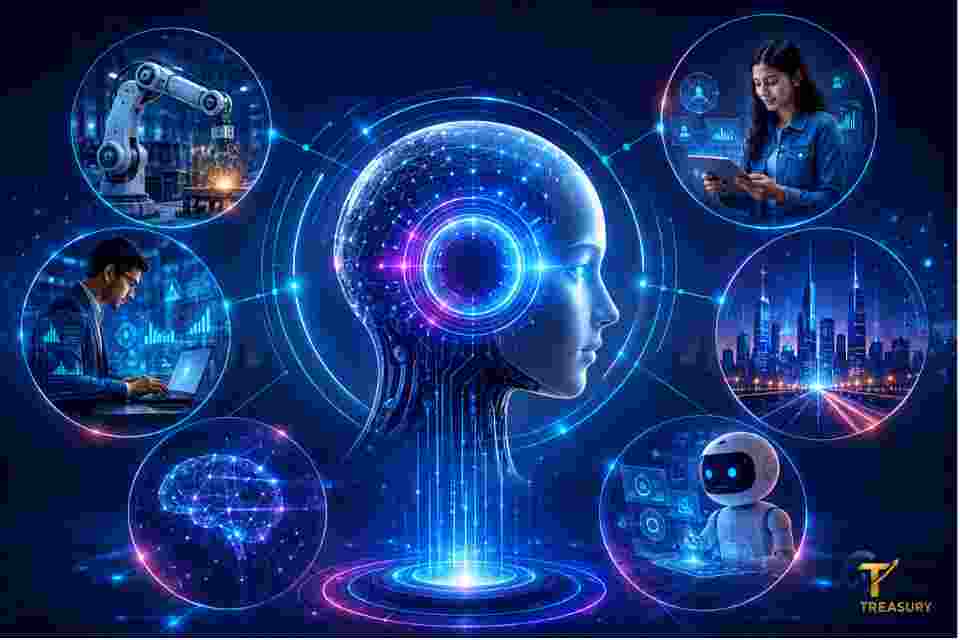
Artificial Intelligence (AI) is no longer a futuristic concept in India. In 2026, AI is becoming a key driver of economic growth, innovation, productivity, and digital transformation across industries. From startups and large enterprises to schools and universities, AI technologies are reshaping how people work, learn, and do business.
The Government of India’s IndiaAI Mission aims to expand AI infrastructure, support startups, develop indigenous AI models, improve AI education, and promote responsible AI adoption across sectors.
As AI adoption accelerates, India is entering a new phase where businesses, professionals, students, and entrepreneurs must adapt to a rapidly changing digital landscape.
India’s AI Transformation Journey
TRADITIONAL WORKFLOWS
 ↓
DIGITAL TRANSFORMATION
 ↓
AI TOOLS & AUTOMATION
 ↓
SMART BUSINESSES
 ↓
AI-POWERED EDUCATION
 ↓
NEW JOB OPPORTUNITIES
 ↓
AI-DRIVEN ECONOMY
What Is Driving India’s AI Revolution?
Several factors are accelerating AI adoption across the country.
Government Support
The IndiaAI Mission is focused on expanding compute infrastructure, AI research, startup funding, data access, and AI education. The initiative also aims to democratize access to AI technologies and build indigenous AI capabilities.
Startup Growth
Indian startups are increasingly integrating AI into healthcare, finance, education, agriculture, logistics, and customer service solutions. AI-powered innovation is becoming a major part of India’s startup ecosystem.
Enterprise Adoption
Businesses are moving beyond experimental AI projects and integrating AI into daily operations to improve efficiency, automate workflows, and enhance customer experiences.
How AI Is Changing Jobs in India
AI is creating both opportunities and challenges in the job market.
Jobs Likely to Be Automated
Routine and repetitive tasks are increasingly being handled by AI systems.
Examples include:
- Basic data entry
- Customer support automation
- Document processing
- Simple coding tasks
- Administrative workflows
Industry reports suggest that AI may significantly impact some traditional roles while simultaneously creating new opportunities.
New AI-Powered Careers Emerging
AI is creating demand for new job categories.
AI Engineer
Develops machine learning models and AI applications.
Prompt Engineer
Designs and optimizes prompts for generative AI systems.
AI Product Manager
Oversees AI-driven products and services.
AI Ethics Specialist
Ensures responsible and ethical AI implementation.
AI Security Analyst
Protects AI systems from cyber threats.
According to NITI Aayog’s AI economy roadmap, India could create millions of new AI-related opportunities if it successfully develops AI talent and reskilling initiatives.
Why Upskilling Matters
Experts increasingly emphasize that future employment will depend on a person’s ability to work alongside AI rather than compete against it.
Important skills include:
- AI literacy
- Data analysis
- Problem-solving
- Critical thinking
- Prompt engineering
- Digital communication
Organizations are investing heavily in AI training and workforce development to address emerging talent gaps.
How AI Is Transforming Businesses
AI adoption is changing how companies operate.
1. Customer Service Automation
AI chatbots and virtual assistants provide faster customer support while reducing operational costs.
Benefits include:
- 24/7 availability
- Faster response times
- Improved customer satisfaction
2. Marketing and Content Creation
Businesses use AI tools to:
- Generate content ideas
- Create marketing campaigns
- Analyze customer behavior
- Improve SEO strategies
This allows companies to scale marketing efforts more efficiently.
3. Business Decision-Making
AI-powered analytics help organizations:
- Predict customer demand
- Identify market trends
- Optimize pricing strategies
- Improve forecasting
AI is increasingly becoming a boardroom-level strategic priority for Indian enterprises.
4. Startup Innovation
AI is helping startups build products with smaller teams and lower costs.
Popular AI startup sectors include:
- HealthTech
- FinTech
- EdTech
- AgriTech
- Cybersecurity
Government support and startup financing initiatives continue to encourage AI innovation.
How AI Is Transforming Education
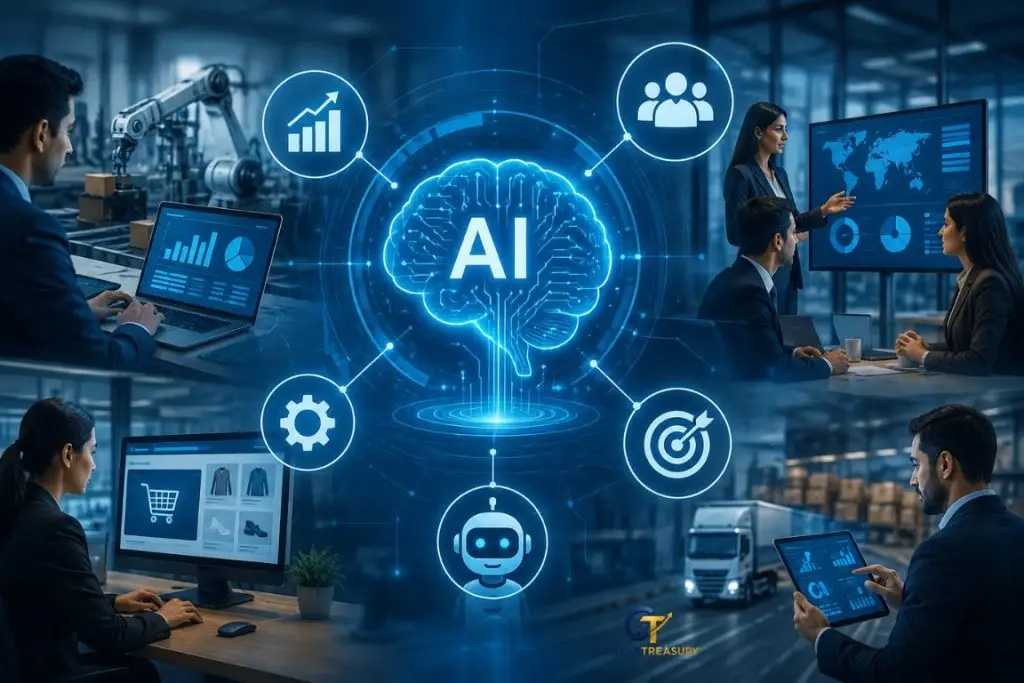
Education is experiencing one of the most significant AI-driven transformations.
Personalized Learning
AI-powered platforms can adapt learning content to individual student needs.
Benefits include:
- Customized lessons
- Adaptive assessments
- Learning gap identification
- Personalized recommendations
AI in Schools
Several initiatives are promoting AI literacy among students.
AI education programs aim to prepare learners for future careers by teaching:
- AI fundamentals
- Responsible AI use
- Problem-solving
- Digital skills
National initiatives are expanding AI education at school and higher education levels.
AI in Higher Education
Universities are increasingly offering:
- AI certifications
- Machine learning programs
- Data science courses
- AI-integrated degree programs
Industry-academic partnerships are also helping students gain practical AI experience.
Challenges of the AI Revolution
Despite its benefits, AI adoption presents several challenges.
Skill Gaps
Many organizations struggle to find qualified AI professionals.
India’s growing AI sector faces a significant talent shortage, creating strong demand for skilled workers.
Ethical Concerns
Organizations must address:
- Bias in AI systems
- Privacy concerns
- Transparency
- Responsible AI governance
The Government of India has introduced governance frameworks emphasizing safe, trusted, and accountable AI development.
Workforce Transition
Workers whose tasks become automated may need reskilling and upskilling to remain competitive.
Experts suggest that continuous learning will become essential in the AI era.
Future of AI in India
The future of AI in India appears promising.
Key growth areas include:
- Generative AI
- Healthcare AI
- Education Technology
- Cybersecurity
- Smart Manufacturing
- Agriculture Technology
- AI Research
- Language AI Models
Government initiatives, private-sector investment, startup innovation, and educational reforms are collectively helping position India as a major global AI hub.
Key Takeaways
Opportunities
- New job creation
- Business innovation
- Improved productivity
- Better learning experiences
- Startup growth
Challenges
- Workforce disruption
- Talent shortages
- Ethical concerns
- Skill gaps
Success in the AI era will depend largely on continuous learning, responsible adoption, and effective collaboration between government, industry, and educational institutions.
Frequently Asked Questions (FAQs)
What is the IndiaAI Mission?
The IndiaAI Mission is a government initiative designed to strengthen AI infrastructure, talent development, startup growth, and responsible AI adoption across India.
Will AI replace jobs in India?
AI may automate some routine tasks, but it is also expected to create new job opportunities requiring advanced digital and AI-related skills.
Which industries will benefit most from AI?
Healthcare, education, finance, manufacturing, agriculture, logistics, and technology sectors are expected to see significant AI-driven growth.
Is AI a good career choice in 2026?
AI-related careers remain among the fastest-growing professional fields due to increasing adoption across industries.
Disclaimer
This article is for educational and informational purposes only. AI technologies, government initiatives, industry demand, and job market conditions may change over time. Readers should verify information through official sources before making career or business decisions.





Leave a Reply